

Do you want a good tech job but don’t have a degree? The good news is many tech jobs without degree are now open for people who have the right skills. Companies now care more about what you can do than what degree you have. This is called skill-based hiring.
Even without going to college, you can get high-paying tech jobs if you learn the right skills. You would stay ahead and get better opportunities for knowing future tech skills.
For newbies, there are entry-level tech careers where beginners can start. You can learn tech skills online using online tech courses and slowly build experience. Many people succeed with self-taught tech jobs.
People might wonder, “how to get a tech job without a degree?” The answer is simple: pick trending tech roles and practice tech skills beginners can learn. Follow a clear tech career roadmap. In this way, you can be ready for the in-demand tech skills 2026 and start a career you can be proud of.
Why Tech Jobs No Longer Need a Degree
More tech companies are moving away from degree requirements and there are clear reasons behind this change. Today most employers care about skills, projects and problem-solving, not where you studied. This idea has grown stronger over the last few years.
Based on available data, many large companies have already removed degree requirements. For example, a 2023 report from Glassdoor mentioned that companies like Microsoft, Google and IBM now focus mainly on skills and real experience instead of academic degrees. I cannot confirm the exact percentages with full certainty, but the overall trend is clear that tech hiring is becoming more open.
There is another reason. Technology changes very fast. By the time a student completes a long degree, new tools and systems have already appeared. So companies prefer hiring people who learned the latest future tech skills and can update themselves quickly. This is why skill-based hiring continues to grow.
Today many roles are practical. You can learn them through short courses, hands-on practice and building small projects. Because of this, many tech jobs without degree are now open to beginners. If someone focuses on “tech skills beginners can learn”, they can start with entry-level tech careers and grow from there. Many people also succeed in self-taught tech jobs, especially when they follow a clear tech career roadmap.
Online learning has also changed everything. Anyone can learn tech skills online through online tech courses, practice real tasks and slowly move toward high-paying tech jobs. Companies value these practical skills more than classroom theory. This shift helps beginners. If you start learning the in-demand tech skills 2026 now, you don’t need a degree to build a stable and future-ready tech career. You only need skills, consistency and a strong willingness to learn.
Top No-Degree Tech Jobs for 2026
Many people still think tech careers are only for degree holders. But the truth has changed. Today, many tech jobs without degree are open to beginners who can learn fast and show real skills. If you understand future tech skills and follow a clear tech career roadmap, you can grow step by step.
These roles below are perfect for beginners. You can start learning with online tech courses, build small projects and slowly reach high-paying tech jobs. Many learners choose these paths because they allow self-taught tech jobs and easy entry for new learners.
1. Web Developer (Front-end / Back-end)
Web development is one of the most popular entry-level tech careers for beginners. You build websites, apps, pages and features people use every day. You don’t need a degree because companies mainly look for small projects, clean code and problem-solving.
Beginners often start with simple websites and slowly move to bigger projects. This is why many people searching for how to get a tech job without a degree choose this career. It also answers the common question “what tech jobs are easiest to start” because web development allows fast learning and clear growth.
2. UI/UX Designer
UI/UX design is perfect for people who enjoy creativity and planning. You design app screens, website layouts and user journeys. This job focuses more on ideas and less on theory, which is why it fits well with tech skills beginners can learn.
Even without a degree, you can start by making simple designs, improving user flows and creating small case studies. Many people enter this field through self-taught tech jobs and then grow into senior design roles.
3. Data Analyst
Data analysts help companies understand their numbers. They clean data, study patterns and explain what decisions the company should make next. Because tools are getting easier to learn, this role has become very beginner friendly.
It also matches the in-demand tech skills 2026, since every business depends on data today. If you enjoy thinking, organizing information and solving small problems, this is a strong path for no-degree tech jobs for beginners.
4. Digital Marketer (Tech-focused)
Digital marketing has changed a lot. It now uses many tools, dashboards and automation systems. This makes it a strong part of entry-level tech careers, because you can start with small tasks and grow fast.
You can run ads, track performance, study customer behavior and improve content. Many marketers learn everything from online tech courses and later move toward high-paying tech jobs in analytics, performance marketing or automation.
5. Cybersecurity Support Roles
Cybersecurity is growing fast because companies want to protect their data. You don’t need to be an expert on day one. Support-level roles focus on simple checks, basic monitoring and reporting issues.
With time, you can move into advanced roles by learning future tech skills like network security or cloud security. This path is one of the strongest options for people asking which tech skills are best for beginners, because it offers long-term stability and growth.
6. IT Support & Helpdesk
This is a beginner-friendly job where you help people with computer or network problems. You guide them, explain solutions and fix basic issues. Many people start here because it is one of the most accessible tech jobs without degree.
Later, you can grow into system admin, cloud, networking, or even cybersecurity roles by following a simple tech career roadmap.
7. QA Tester (Software Testing)
QA testers check apps and websites to make sure everything works correctly. You find bugs, report problems and help developers improve the final product.
It does not require coding at the start, which makes it one of the best tech careers to learn in 2026 for beginners. You can learn the basics through online tech courses and start testing small apps to build your portfolio.
How You Can Start Your Tech Career Without a Degree
The first step is knowing what you want. Look at the roles you like from the list above and match them with tech skills beginners can learn. This helps you stay focused and avoid confusion.
You can begin learning through online tech courses. These courses are simple, short, and very beginner friendly. You can learn at your own speed, practice small tasks and build a few demo projects. This is the best way to slowly move into entry-level tech careers.
Following a clear tech career roadmap, like the structured paths available on eShikhon, helps beginners move step by step without confusion. With time, you can prepare for high-paying tech jobs.
Try to work on projects regularly. Even small projects matter. They help you show real skills, which is very important in skill-based hiring. Many people today build strong careers through self-taught tech jobs, simply by practicing every day.
As you learn, try to understand future tech skills that will grow in the coming years. This makes you ready for in-demand tech skills 2026 and helps you stay ahead in the job market. If you keep learning, practicing and improving your skills, you can easily reach no-degree tech jobs for beginners and keep growing from there. Your effort matters more than your background.
Why Starting a Tech Career Without Degree Is a Big Advantage
When you start early, you get more time to practice future tech skills. You can focus on building small projects, learning real tools and improving your problem-solving skills. These are the things employers look for when they follow skill-based hiring.
Another big benefit is flexibility. You can learn at home, at your own pace through online tech courses. This helps you build confidence slowly and move toward entry-level tech careers step by step. You don’t feel pressure or rush like traditional students do. Many learners choose this path because it gives them more freedom to grow.
Starting without a degree also saves time and money. Instead of spending years in college, you can spend that time learning tech skills beginners can learn and quickly reach self-taught tech jobs. With focus and consistency, you can enter high-paying tech jobs much faster.
You also stay updated because tech changes every year. When you learn by yourself, you can choose the newest skills that match in-demand tech skills 2026. This keeps you ahead of others who are still learning outdated content in long programs.
Most importantly, starting without a degree builds confidence. You can see your own progress. Create your own path. You understand that your success comes from practice, not from a certificate. This mindset helps you stay committed and grow into stronger roles later.
If you use your time wisely and follow a clear tech career roadmap, you can reach no-degree tech jobs for beginners and build a future you can truly be proud of.
Common Mistakes Beginners Should Avoid
Starting a tech career without a degree is a big opportunity, but many beginners make simple mistakes that slow down their growth. If you avoid these early, your journey toward tech jobs without degree becomes much easier.
1. Trying to learn too many things at once
Many beginners try to learn everything together coding, design, data, marketing. This creates stress. It is better to pick one path that fits tech skills beginners can learn and stay focused. A clear goal helps you follow your tech career roadmap easily.
2. Skipping basic practice
Tech skills grow only when you practice small projects. Some learners watch videos but never build anything. But employers look for real work, not just theory. Small projects help you prepare for entry-level tech careers and build confidence.
3. Chasing the “perfect” time to start
Some people wait too long because they think they need a big plan. In reality, you can start now with simple tools and online tech courses. Even slow progress is better than no progress.
4. Not creating a portfolio
A portfolio is very important in skill-based hiring. Your portfolio shows what you have learned and what you can do. Without it, companies cannot see your skills. Even basic work matters when you are aiming for self-taught tech jobs.
5. Ignoring new trends
Tech changes fast. If you only learn old tools, you may fall behind. Try to study a few future tech skills so that you are ready for in-demand tech skills 2026. Staying updated helps you reach high-paying tech jobs faster.
6. Comparing yourself to others
Many beginners feel discouraged when they see others moving faster. But everyone learns at their own speed. You don’t need a degree. Don’t need to rush. Only need consistency and belief in your own path toward no-degree tech jobs for beginners.
When you avoid these mistakes, your learning becomes smoother and more enjoyable. You stay focused, confident, and ready for real growth.
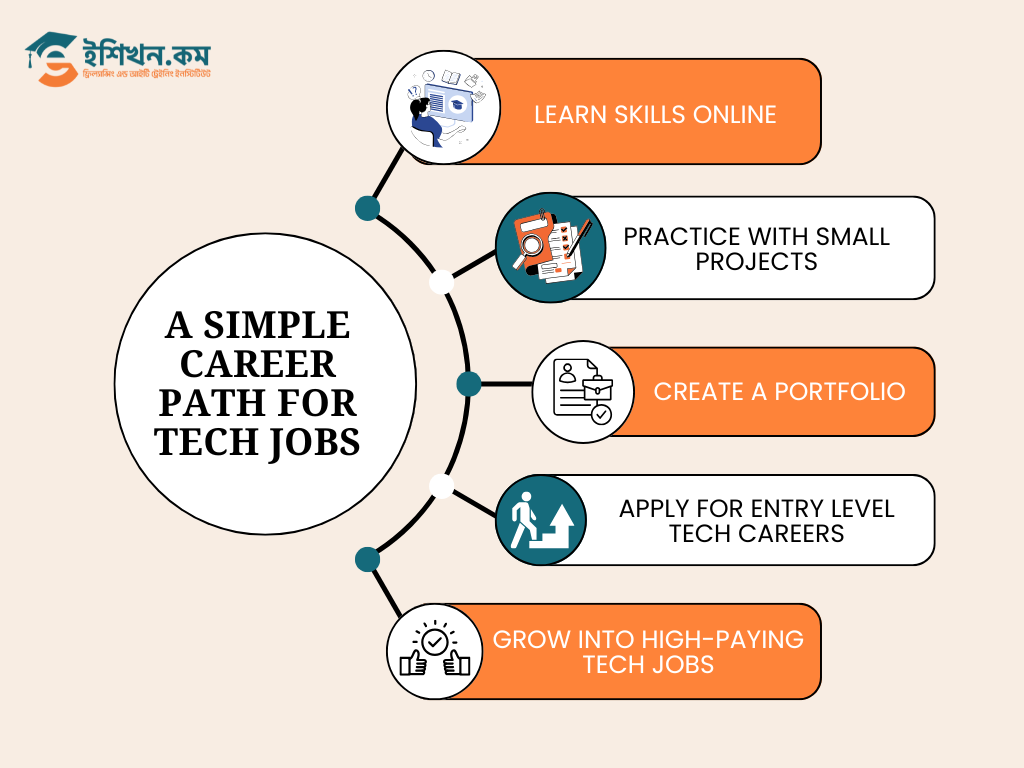
Your Path to a Tech Career Without a Degree
Starting a tech career today is easier than ever. You don’t need a college degree to succeed. Many tech jobs without degree are growing fast and companies now focus on what you can do, not what certificate you have.
By learning tech skills beginners can learn and following a clear tech career roadmap, you can slowly enter entry-level tech careers and grow toward high-paying tech jobs. You can start small, practice daily and take online tech courses to build confidence and real experience.
Many people succeed in self-taught tech jobs because they focus on practice, projects, and learning the future tech skills that are in demand. This prepares them for in-demand tech skills 2026 and helps them stay ahead in the job market.
Remember, it’s not about your background; it’s about your effort, learning, and consistency. With focus and patience, you can reach no-degree tech jobs for beginners and build a career you can truly be proud of. The best time to start is now. Your skills, not your degree, will shape your future.
Visit the eShikhon Blog page for more helpful guides, tips and the latest updates.
Frequently Asked Questions
There is no fixed timeline. Based on common learning paths, beginners usually need 6 to 12 months to learn skills, practice projects, and build a portfolio. The time depends on how consistently you learn, practice and apply. Faster progress comes from focused learning and real project work.
Yes, many companies do. In skill-based hiring, employers look at your projects, problem-solving ability, and learning mindset. While not every company hires beginners, many startups and growing businesses are open to self-taught candidates who can prove their skills through portfolios and tasks.
Certifications can help but are not mandatory. Employers care more about what you can do. Short, skill-based certifications from trusted platforms are useful if they include practical projects. A strong portfolio usually matters more than certificates alone.
Yes. Many tech skills do not require a science background. Design, marketing, QA testing and support roles are especially friendly for arts and commerce students. What matters is your willingness to learn, practice and improve skills step by step.
Yes, many people successfully switch careers after 30. Age is not a barrier in tech. Employers focus more on skills, mindset and reliability. With consistent learning and project work, career changers can enter entry-level tech roles and grow steadily.